
 Luca Giorgio
What to take away
- Look for the problem across your business, not just on the homepage.
- Keep the parts customers already recognise and that still work well.
- Agree the smallest useful scope before committing to a refresh or redesign.
Your business has moved on, but something about how it looks online no longer feels right. Is it the brand? The website? Or simply old photographs and information that need updating?
Before committing to a project, I’d start with what customers are struggling to understand or do. “It feels dated” is a useful starting point, but it needs a little more detail before we decide what to change.
What is the difference?
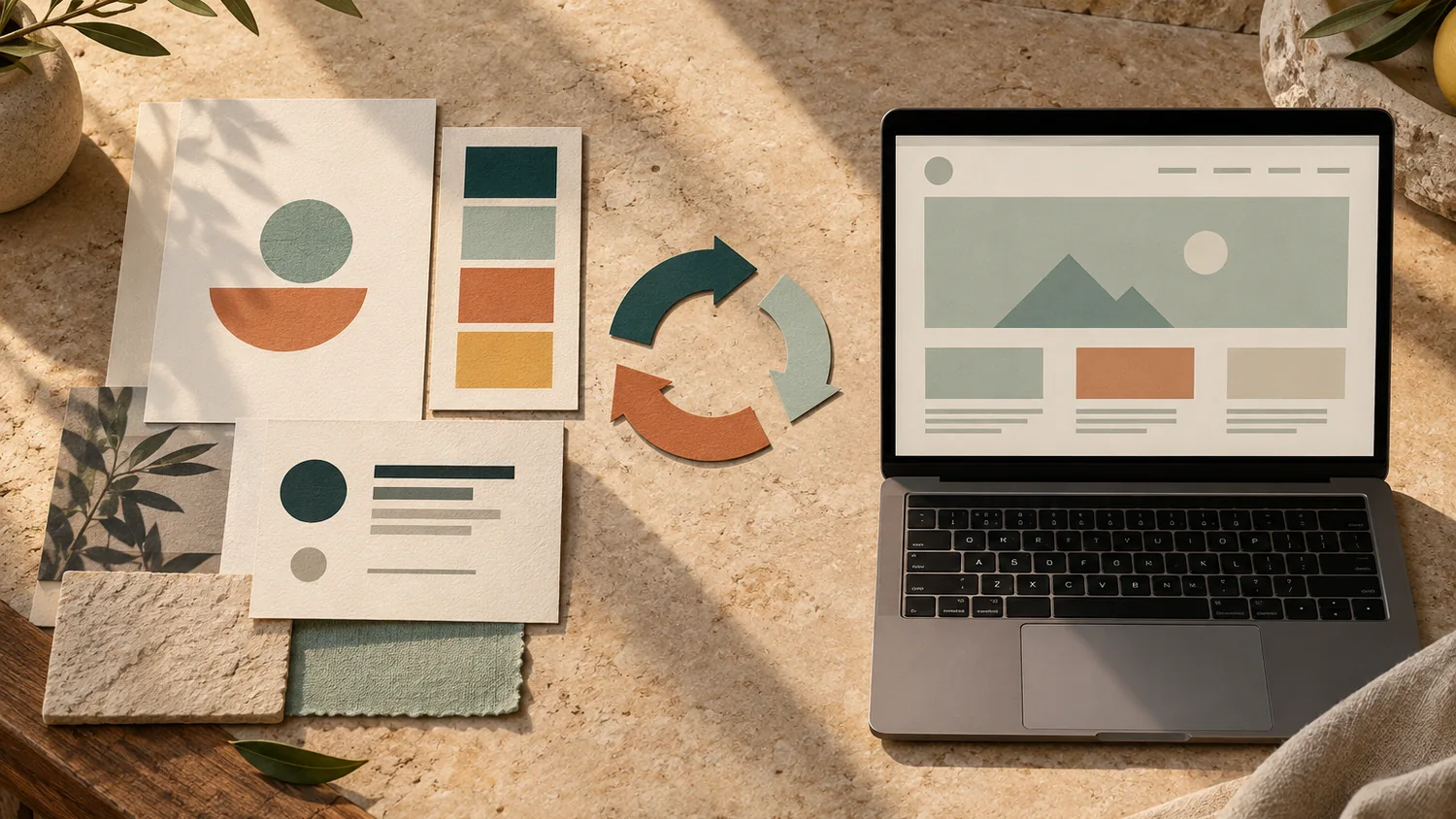
A brand refresh updates how an established business presents itself while keeping the recognition it has earned. That might mean refining the logo, colours, typography, photography or wording. It does not automatically mean changing the name or replacing everything.
A website redesign changes how the website is organised, looks and works. It may involve rewriting pages, improving navigation, making enquiries easier or replacing a system that is difficult to update. A redesign can use your existing identity.
If the audience, offer or purpose of the business has changed substantially, there may be a bigger positioning question to resolve first. A new colour palette alone will not explain a different business.
When a brand refresh makes sense
Look beyond the website. Put your signage, proposals, menus, social profiles and printed materials beside each other.
- Do they give people different impressions of the same business?
- Does the identity still suit the customers you want to attract?
- Can you explain what you offer in words that those customers understand?
- Are staff repeatedly improvising because there are no usable templates or guidelines?
If the same problems appear across several places, work on the identity and messaging may help. Keep what is distinctive and familiar; agree precisely which elements need attention.
For example, a restaurant might have changed its menu and style of service while its photographs, menus and website still suggest a different experience. Refreshing those materials together could make more sense than redesigning the homepage alone.
When the website needs the work
Your brand may already represent the business well. The difficulty might be what happens when someone visits the site.
- Can they find your services, prices or practical details?
- Is it easy to read and use on a phone?
- Do booking links, forms and other important features work?
- Can you update the information without a lengthy workaround?
A business with a recognisable identity and good photography may need clearer pages and a simpler enquiry route. There is no need to change its logo to solve those problems.
Where available, review enquiries, website analytics and feedback alongside a practical check of the site. Low enquiry numbers alone do not prove that the design is at fault: the right people may not be reaching it, or the offer may need explaining better.
When a smaller update is enough
Sometimes the useful work is replacing photographs, rewriting a service page, fixing a form or making a menu readable on mobile.
If the structure and identity still do their jobs, those improvements may be enough. Ask what a full redesign would solve that a focused update would leave unresolved. The answer should justify the extra work.
When you need both
If the identity no longer reflects the business and the website is difficult to use, plan both together. Agree the audience, offer, wording and essential visual choices before developing the main website layouts. This reduces the risk of building pages around decisions that are about to change.
The scope should name what you are keeping, what is being replaced and where the refreshed identity will appear. A website project does not automatically include new packaging, signage or every printed item.
A useful first step
Choose three things customers should understand or do, then check how well your current materials help them. Write down specific examples of what gets in the way.
Bring those notes, your website and any existing brand files. I can help you review them and agree whether the next step is a focused update, a brand refresh, a website redesign or both. We’ll define the work, cost and timing before starting.